





There is a bit of a gap in the backpack market between ultra running vests and full backpacking packs. Within this gap is where many fastpackers live. These are people who are backpacking, in the sense that they are carrying everything they need for multi-day trips, but they often want to be able to run. The load out for anyone who is running is always going to have to be very ultralight-focused, but the available pack designs coming from each side typically serve this niche poorly.
Some general UL hiking backpacks can sometimes perform ok for running, but it’s pretty hit or miss, and often, they perform very poorly while running. It usually comes down to how the hip belt resists upward bounce. If the belt locks under your rib cage, it can prevent bouncing, but with many packs, the main focus is lifting weight off shoulders, with no concern over bouncing. Simple frameless UL packs are also a little hit or miss. With these, it typically comes down to whether it has running functional vest style straps. Many vest straps are more focused towards creating pockets. However, the main reason for vest straps is to create a tension span that can lock the pack to the bottom of your rib cage so that it doesn’t bounce up while running. Simple frameless packs with normal straps tend to be really bouncy. If they have vest straps, sometimes they are ok, but most are not really focused on running and can bounce and sag.
From the running gear side, many of the vests are designed for the light load out of supported ultra running event. They tend to have elastic cinches and attachments and stretchy fabric that fits more like clothing than a pack. These vest straps are usually just scaled up and used on the larger packs as well. The problem is, that once you get into fastpack load weights, the stretch and elastic can’t secure it well. It works great for light loads, but 10lbs would completely overload it.
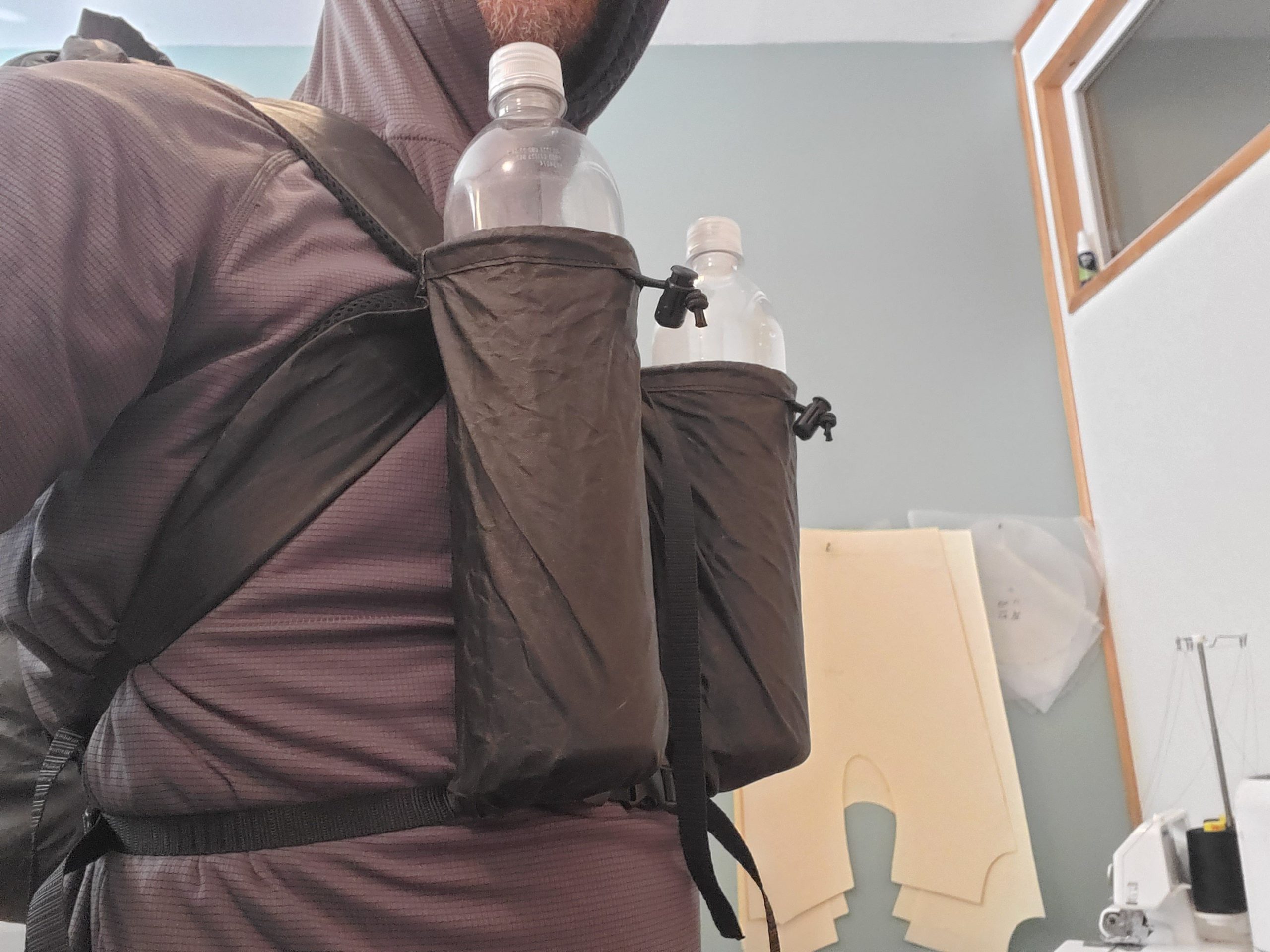
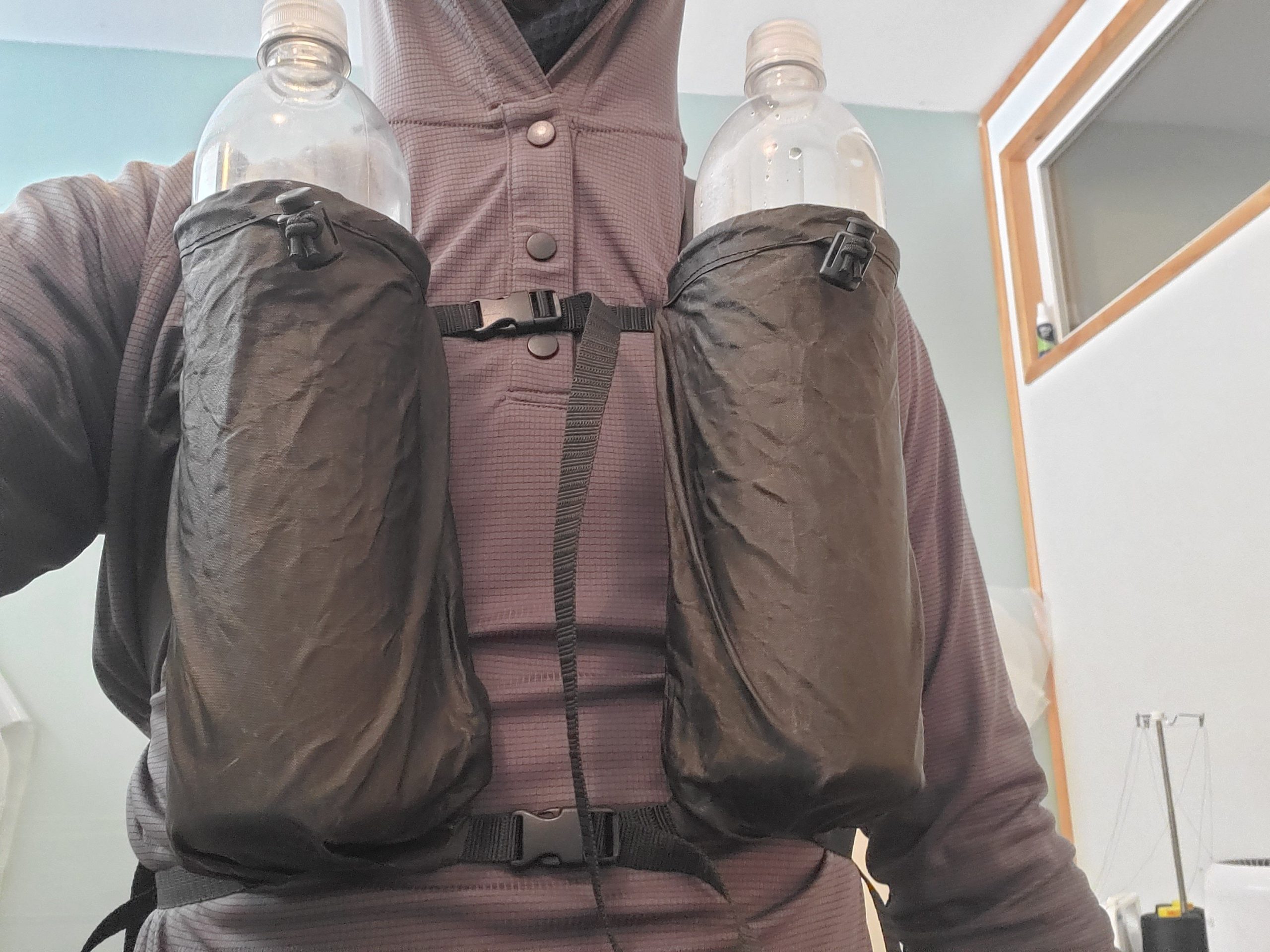
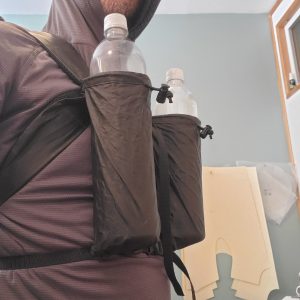
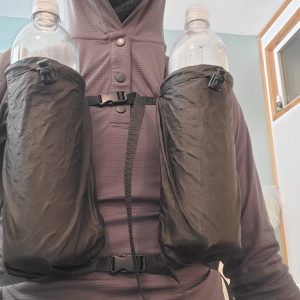
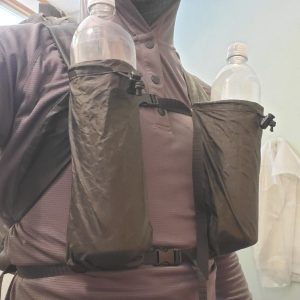
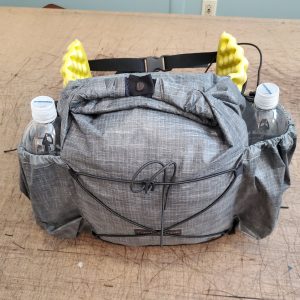
The runner pack was designed to walk back the vest strap concept, to its raw functionality of securing a load for running. The aim was enough capacity in back to carry a UL base load and a full 2 liters of water up front. Typical running vests can’t hold this much in front, and you need to use a bladder in back, which compromises gear storage. With hiking packs with bottle pockets, they can often carry the weight of 2 liters, but the design of this type of strap directs the bottle into your underarm, which restricts a running (or a hiking) gait. The runner pack “floats” the bottle pockets off the shoulder straps and connects to an adjustable band at the bottom, so that the angle and location of the bottles is adjustable. The shoulder strap for a high-riding running pack, needs to angle back through the underarm abruptly, but you want the bottles positioned vertically in front where they are out of the way of your swinging arms. These let the bottles hang vertically, while maintaining the shoulder strap angle and providing that lower band that locks the pack to your rib cage. Each aspect is fully adjustable so that you can dial in the shoulder strap tension, pack ride height, where the bottle bottoms sit, how far apart the bottles are, what angle the bottles are at, and how much tension is on the lower band. Both the rear pack and the front bottles are fully secured such that there is no bounce or swinging. At this point, the shoulder strap width and the bottle hang position along the shoulder strap is fixed. Customizable, but fixed. Additionally, without all the material coverage of full vest straps, these allow for airflow between the straps. Vests straps tend to cover up a lot of skin, which can be hot.
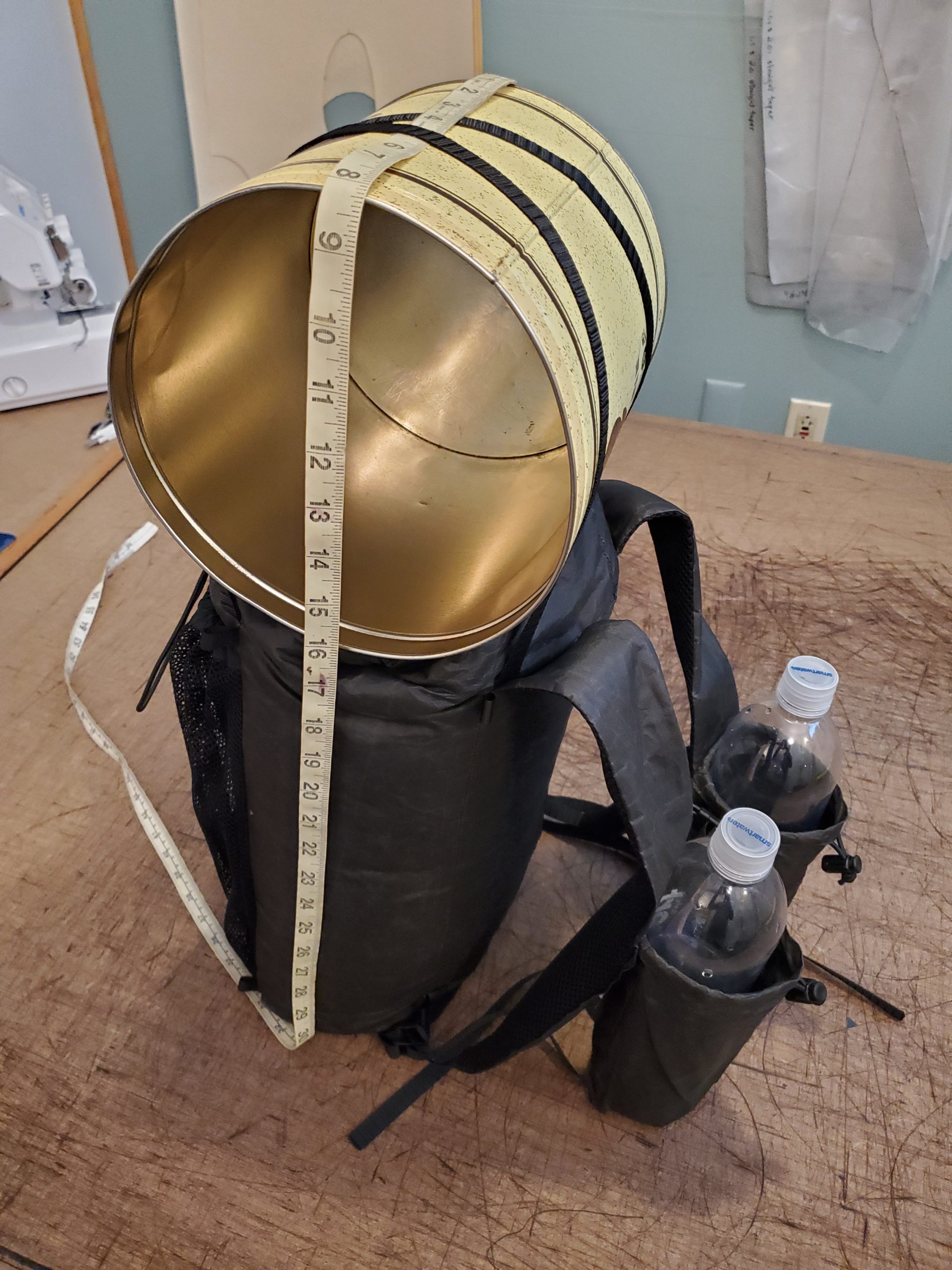
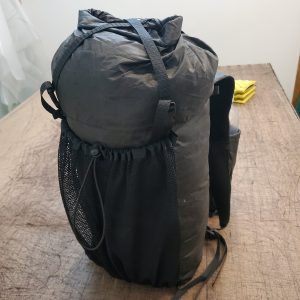
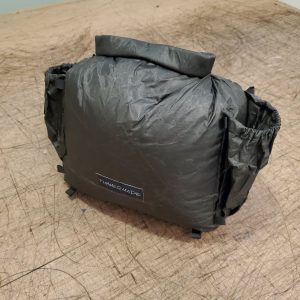
The main body of the pack is simple, basic, and light. It has 21 liters of capacity in the main body, plus a large pleated mesh pocket in front. The body has a circumference of about 28″. With two rolls on the rolltop, the height is about 21″.
7.5oz in Technoforce Steel
Full height side pockets are optional for additional storage.
This pack is partially designed around the idea of using a hip carry system for consumables load and a runner pack for base load. It can work as a stand alone pack, but much of convenient, quick access storage (beyond the front bottles) is left off of this pack because it is incorporated in the hip packs.
It can carry an 8″ diameter bear can on top. This system is best if you move food load to hip packs, or side pockets, and carry the can empty on top. An 8″ can will fit in the main body vertically, but this is likely rather uncomfortable. A 6 panel section of Zlite foam pad can fit in the body if it’s bent into an L shape along the back and bottom.
Reviews
There are no reviews yet.